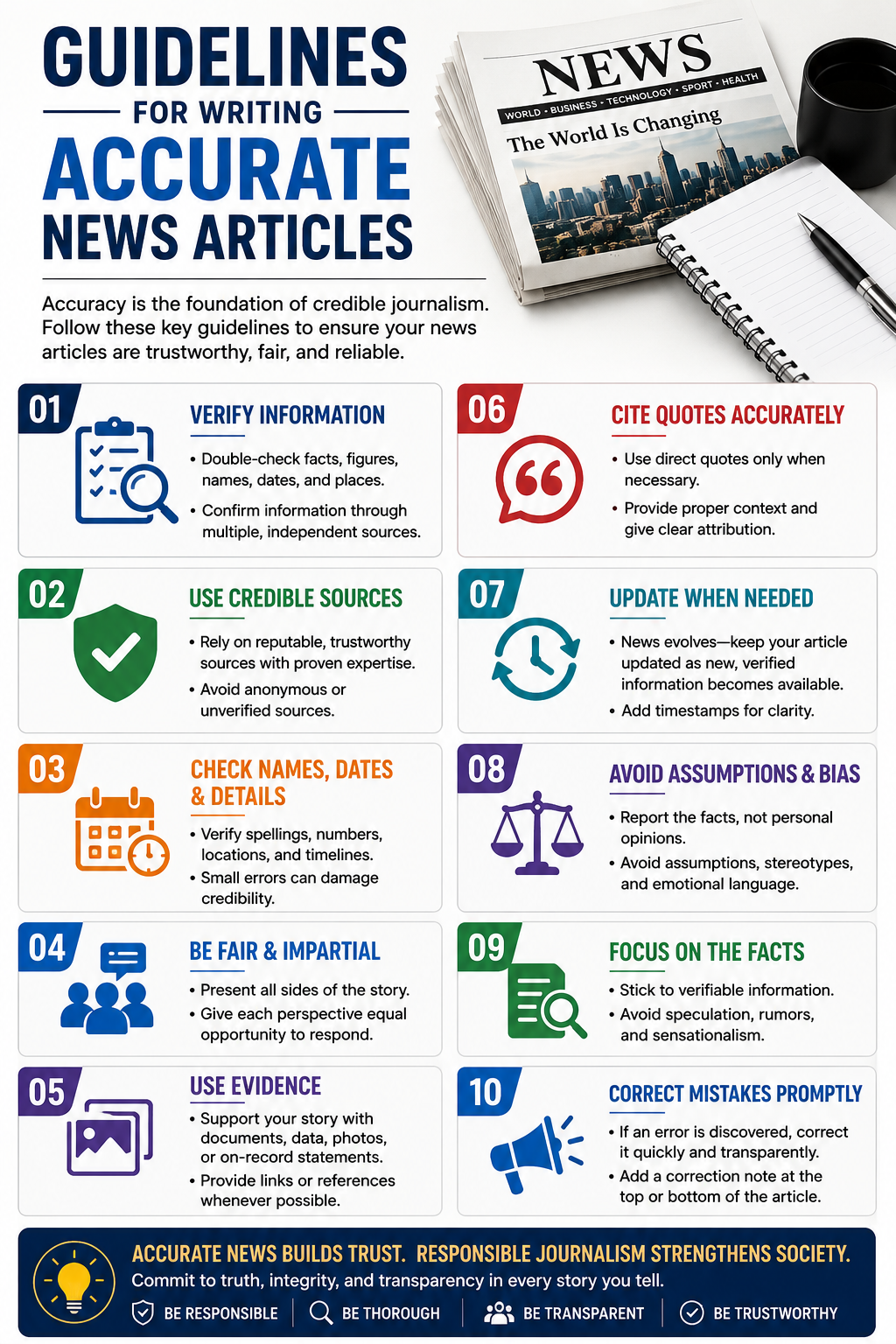
Guidelines for Writing Accurate News Articles
Summary: This article outlines best practices for producing neutral, fact‑based news stories, covering structure, verification, and SEO considerations.
Main Story
Professional journalism requires a clear, organized approach that separates verified facts from analysis. Reporters should:
- Use a neutral tone and avoid sensational language.
- Clearly label opinions, editorial commentary, or speculation.
- Attribute every claim to a reliable source (e.g., official statements, reputable agencies).
- State when information is unverified or still developing.
Background
Traditional news writing follows a hierarchy of information, often called the “inverted pyramid.” The most critical details appear first, followed by supporting context. This format ensures readers receive essential facts quickly, even if they skim the article.
Impact
Adhering to these standards builds public trust and protects outlets from legal challenges. Accurate reporting also:
- Reduces the spread of misinformation.
- Supports informed civic engagement.
- Strengthens the credibility of journalists and their organizations.
What’s Next
Newsrooms are increasingly integrating digital tools for fact‑checking and source verification. Ongoing training in data literacy and bias awareness will be essential as media ecosystems evolve.
SEO Recommendations
For optimal search visibility, consider the following:
- Primary keyword: news article writing guidelines
- Meta description (150‑160 characters): "Learn essential, unbiased guidelines for writing accurate news articles, from structure and verification to SEO best practices."
- URL slug:
news-article-writing-guidelines - Use descriptive H2 headings and avoid keyword stuffing.